
Ground Screw Installation Equipment Guide for Different Site Conditions
Choosing the correct installation equipment is one of the most important preparations before starting ground screw construction. Many contractors only consider the power of the machine and ignore site terrain, access restrictions, soil hardness and project scale. Wrong equipment selection will slow down construction progress, cause damage to ground screw shafts or helical blades, and even lead to inconsistent installation depth and torque results. Understanding the matching rules between ground screw and installation tools helps installers and project managers improve construction efficiency and guarantee installation quality on site.
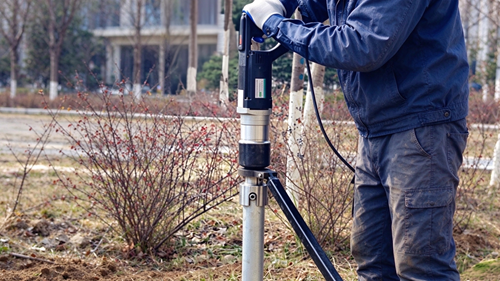
Hand held portable drill units are the most flexible option for small scale ground screw projects. This kind of equipment is lightweight and easy to transport, so it can enter narrow sites where large vehicles cannot reach. Typical application scenarios include fence foundation, small sign support, tiny garden structure and low quantity ground screw jobs. The portable drill is powered by gasoline or electric motors, and it is usually operated by two workers. It works well in soft soil such as loose topsoil and light clay. However, its output torque is limited. When meeting dense sand, compact clay or scattered rock fragments, portable drills struggle to drive ground screw to the designed depth. Operators also need to control verticality manually, so the error rate is higher compared with machine mounted power heads.
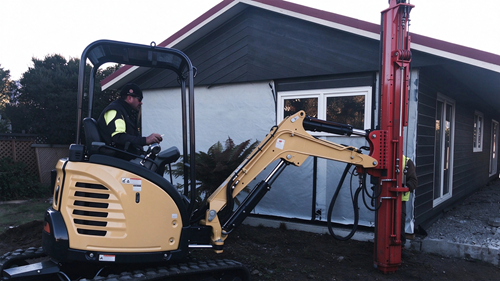
Excavator mounted power heads are widely adopted in medium and large ground screw projects. The power head is fixed on the arm of an excavator, and it uses the hydraulic system of the host machine to provide strong and stable torque. This equipment can install ground screw with larger diameter and deeper penetration. Solar farm projects are the main application for excavator mounted power heads. It can keep better vertical control during driving and record torque data if fitted with monitoring modules. One obvious limitation is site access. Standard excavators require solid and wide access roads. Sites with steep slopes, muddy soft ground or limited entry space may not support excavator movement. The weight of excavators can also cause ground compaction and ruts on wet land.
Skid steer mounted power heads serve as a middle solution between handheld drills and full-size excavator attachments. Skid steer loaders are compact and have excellent mobility. They can turn in place and travel on relatively narrow paths. Compared with hand held tools, skid steer mounted units deliver much higher torque. They fit mid sized projects such as small solar arrays and commercial temporary buildings. Skid steer machines perform better on uneven ground than large excavators. Still, they have weight limits. On extremely wet and muddy sites, skid steer vehicles may sink and lose mobility.
For steep hillside projects, special low-ground-pressure machines and customized power head brackets are often required. Ordinary heavy machinery may slide on slopes, bringing safety risks. Low-ground-pressure tracks reduce unit weight on soil and improve stability on sloped terrain. Besides machine selection, installers must also consider auxiliary tools. Positioning stakes, laser level, torque measuring tools and depth markers are necessary accessories regardless of main equipment type. These auxiliary tools help control layout accuracy, verticality and penetration depth of each ground screw.
Soil condition directly decides the minimum torque requirement and machine type. Soft loam and loose sand need relatively low torque, so portable handheld tools can finish the installation work. Compact clay and dense sand demand higher hydraulic torque, which usually calls for skid steer or excavator mounted power heads. If the site contains rock fragments or thin rock layers, pre-drilling is often necessary before driving ground screw. Pre-drilling breaks hard soil or rock layers to reduce resistance. Without pre-drilling, even high torque machines may bend the steel shaft of ground screw or damage helical blades.
Project scale is another key factor for equipment planning. Small jobs with tens of ground screws usually prefer portable drills to save transportation and mobilization cost. Projects with hundreds or thousands of screw piles such as utility-scale solar farms need high efficiency hydraulic power heads. Large machines reduce working hours per pile and lower total labor cost. Contractors should calculate overall cost rather than only look at rental or purchase price of the machine. Transportation, fuel, operator salary and site preparation all contribute to the total expense of using installation equipment.
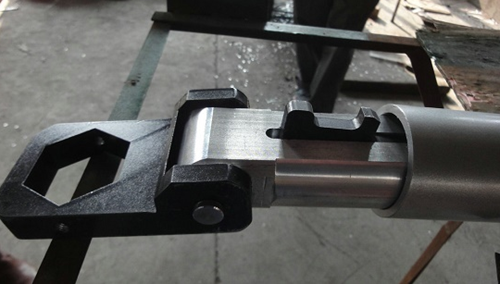
Equipment maintenance should not be overlooked during long term ground screw construction. Daily inspection on hydraulic hoses, gearbox and drive adapters can prevent sudden breakdown on site. The connection adapter between power head and ground screw is a wearing part. Severe wear will cause slipping during rotation and affect torque transfer. Regular replacement of worn adapters keeps installation stable and protects ground screw from twisting damage.
Operators should also conduct simple function tests of the whole power system before starting work each day. Quick checks of rotation response and pressure readings help identify hidden problems early. This simple daily routine cuts down unexpected downtime and protects both operators and ground screw products from avoidable damage.
Site supervisors should also keep maintenance logs to record inspection results and part replacement records. These written records help track equipment condition over the whole project period. They are useful for planning future part orders and scheduling maintenance work before parts fail completely.
It is also important to match the drive adapter size with the shaft diameter of ground screw. Mismatched adapters will create eccentric force while rotating. This will make the ground screw tilt during installation and may deform the steel pipe. Before starting bulk installation, site teams should carry out trial driving for one or two ground screws. Trial installation tests machine performance, checks soil resistance and verifies whether the selected equipment can reach the target torque and depth. Adjustments can be made early before mass construction to avoid large scale rework.
No single type of installation equipment suits all construction sites. Installers and project planners need to evaluate site access, slope, soil type, project quantity and load requirements together. Proper selection of ground screw installation equipment improves safety, shortens construction time and ensures every ground screw meets the design specification. Good preparation of construction machinery lays a solid foundation for the whole foundation project.


Leave a Reply
Want to join the discussion?Feel free to contribute!